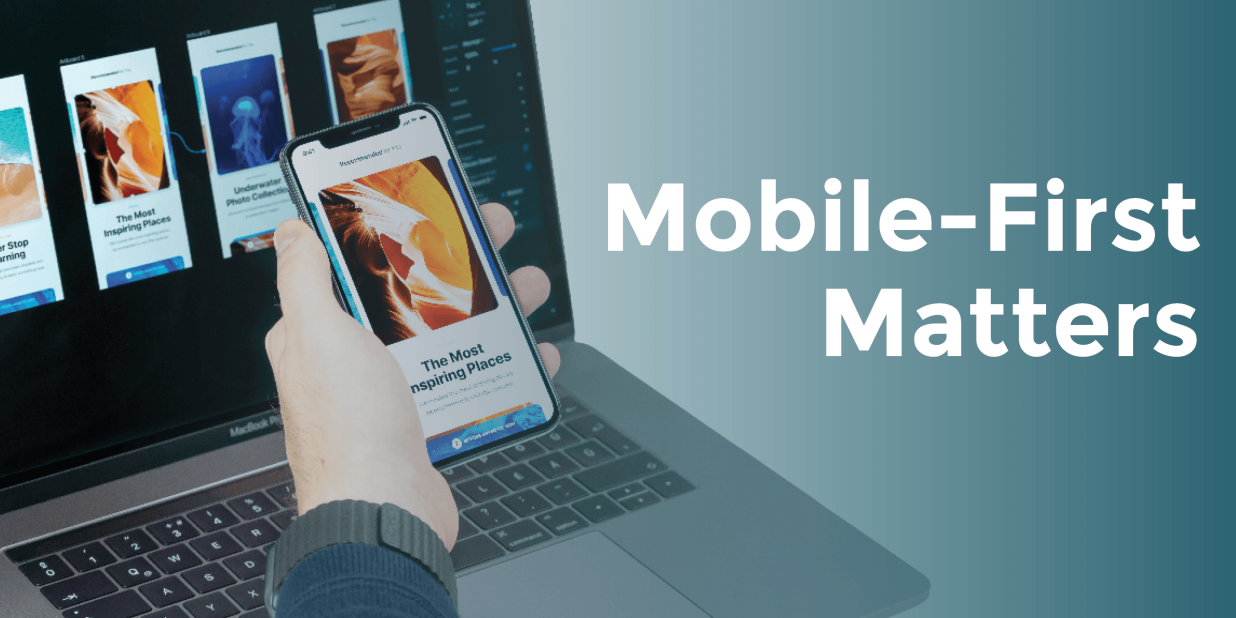
The Importance of Mobile-Responsive Design in 2026
23 April 2026
Your audience isn’t just browsing on one device; they’re moving seamlessly between smartphones, tablets, laptops, and desktops throughout their day. In 2026, your website and application must deliver a consistent, high-quality experience across every screen size. That’s where mobile-responsive design becomes essential. A responsive digital experience isn’t just about fitting content onto a smaller screen; it’s about ensuring your brand shows up clearly, professionally, and effectively, no matter how users access it.
What Is Mobile-Responsive Design?
Mobile-responsive design is an approach where websites and web apps are built to automatically adapt to different screen sizes and devices. Instead of creating separate versions for mobile and desktop, a responsive design dynamically adjusts layout, content, and functionality to provide an optimal experience everywhere.
This means your website and/or app:
- Resizes and reorganizes content based on screen size
- Maintains usability across mobile devices, tablets, and desktops
- Performance is optimized for speed and responsiveness
- Ensures consistent branding and messaging across all platforms
- Delivers a seamless experience regardless of how users engage
This approach leads to a more intentional, streamlined experience across all devices.
Why Mobile-Responsive Design Matters More Than Ever
1. Mobile Usage Continues to Dominate
Mobile is no longer the future; it’s the present. In the second quarter of 2025, mobile devices accounted for 62.54% of the global website traffic, highlighting a clear shift in how users access digital content. This means the majority of your audience is experiencing your website for the first time on a mobile device. If that experience is slow, confusing, or difficult to navigate, users are far more likely to leave and turn to a competitor.
2. User Experience Directly Impacts Brand Perception
Your website is often your first impression, and users expect it to work flawlessly on any device. A seamless experience signals professionalism, trust, and credibility, while a poor one can damage your brand instantly. A responsive design ensures that:
- Navigation is intuitive and easy to use
- Content is easily readable without excessive zooming
- Pages load quickly and function properly
When users can quickly find what they need, they’re more likely to stay engaged and more likely to return.
3. Mobile Experiences Influence Purchasing Decisions
Today’s consumers are not just browsing on mobile devices; they’re taking action. From researching services to completing transactions, mobile plays a critical role in the customer journey. Even small usability issues, like hard-to-click buttons or slow load times, can prevent users from converting. A well-designed mobile experience:
- Reduces friction in the user journey
- Builds confidence in your brand during key decision-making moments
- Makes it easier for users to complete actions
4. Mobile-Responsive Design Supports SEO and Search Rankings
Search engines prioritize websites that provide strong mobile experiences when determining search rankings. With mobile-first indexing, platforms like Google evaluate your site’s mobile version first when deciding where it should appear in search results. That means your website’s mobile experience directly impacts your website’s:
- Visibility in search engines
- Organic traffic
- Overall digital performance
A responsive approach ensures your website is structured, optimized, and positioned to perform well from both a user and search perspective.
5. It Supports Long-Term Growth and Flexibility
Your digital presence needs to evolve alongside your business, and a responsive website and app provide a scalable foundation that adapts to new devices, screen sizes, and user behaviors over time. Responsiveness builds your online platforms with flexibility in mind, making future updates, integrations, and improvements seamless. Instead of maintaining multiple versions of your online presence, responsive design allows you to:
- Make updates more efficiently
- Maintain consistency across platforms
- Integrate new features without breaking the user experience
Why Working with Web and Technology Professionals Matters
While responsive design may sound straightforward, executing it effectively requires strategic planning and technical expertise. Without a cohesive approach, businesses often run into issues like inconsistent layouts, slow performance, or broken functionality across devices. Experienced professionals ensure that:
- Design and development work together seamlessly
- Content is structured for readability on all screen sizes
- Technical performance supports both UX and SEO
- Integrations and features function reliably across devices
A well-executed responsive design doesn’t just “adjust”, it delivers a consistent, high-performing experience everywhere. An experienced web and app development team ensures that design, functionality, content, and performance are all aligned to create a seamless experience, no matter how users interact with your brand.
Responsive Design Is Standard at JNT Company
At JNT Company, mobile-responsive design is a foundational part of every website and application we build. We create custom digital solutions that are:
- Automatically responsive across mobile devices, tablets, laptops, and desktops
- Optimized for performance, usability, and conversion
- Built to create meaningful connections between your brand and your audience
By combining strategy, design, and development, we ensure your digital presence not only looks great but also works seamlessly for every user, on every device.
Ready to create a custom website or application that performs across every device? Connect with us to create a responsive digital experience designed to grow with your business: https://dev.jntcompany.com/contact-us.
- Claire Clark
Marketing Project Manager, JNT Company